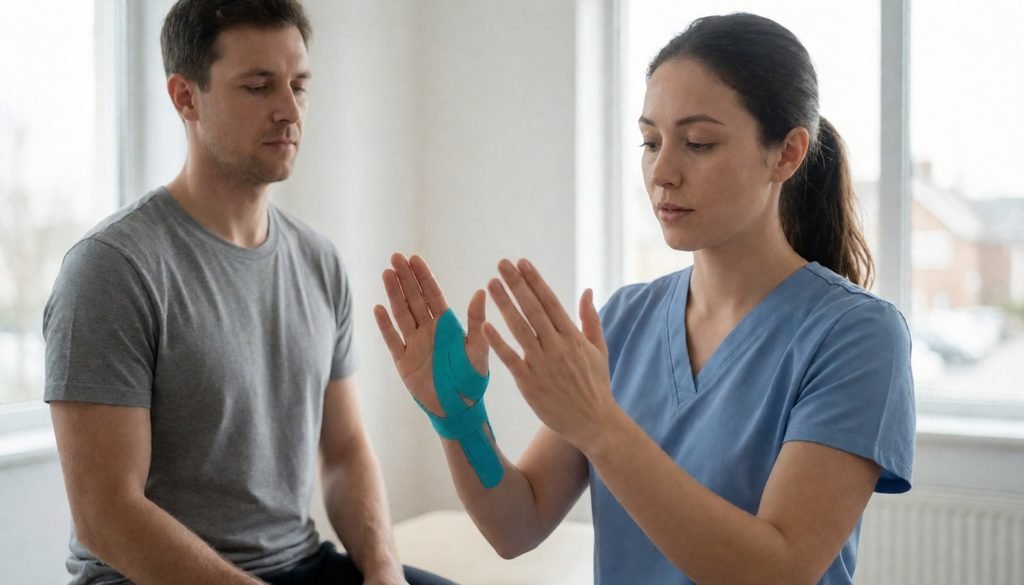
People ask, “How does kinesiology tape work?” The thin elastic strip seems simple. It sticks to the skin and stretches with body movement.
That basic contact explains how kinesiology taping works on the skin. When you move, the tape creates changing sensations across the taped area. Your nervous system receives those signals, which may affect how you notice movement or discomfort. However, results vary between people.
The tape does not push a joint into position or rebuild damaged tissue. It provides sensory input while leaving the body free to move.
It Sticks to the Skin

The adhesive holds the flexible tape against your skin while you move. This close contact lets the strip follow the skin as the area bends and stretches. Without secure contact, the tape may lift or slide, making its sensation less consistent.
How adhesive affects the skin depends partly on skin condition, sweat, and movement. The adhesive’s effect on your skin should feel like steady contact, not rigid support. How the sticky layer interacts with skin can also differ between people.
Some people tolerate it well, while others develop redness, itching, or burning. Apply tape only to healthy, clean skin. Remove it gently if irritation begins or the skin becomes uncomfortable.
It Stretches With Movement
Unlike rigid sports tape, kinesiology tape can lengthen and return toward its original shape. This give-and-return action explains why elastic material moves naturally.
Picture a strip running across the front of a knee. When the knee bends, the strip extends with it. As the leg straightens, the material relaxes again. This simple example shows how flexible material follows movement without holding the joint in one position.
The same elastic action explains why the tape stretches with the body during walking, squatting, or reaching. However, it should move comfortably. Too much tension may cause tightness, pulling, or skin irritation. The tape should follow normal movement, not force a different range.
How Skin Sensory Feedback Begins
Your skin constantly detects touch, pressure, and stretch. When KT tape stays attached, it adds another source of contact. As a taped elbow bends, the material moves with the skin and changes the pressure across that area.
You may notice light pulling, tightening, or relaxing. These changing sensations are the first step. They provide sensory information from the skin about what is happening at the surface.
The tape does not need to touch the muscle or joint underneath. Its direct contact is with the skin. Some people notice skin sensory feedback clearly, while others feel very little. The sensation can also change with tape placement, tension, and movement.
It Sends Extra Feedback

Skin receptors respond as tape pressure changes during movement. They turn that contact into nerve signals. These signals travel through the nerves to the spinal cord and brain. Your nervous system receives touch information from the skin all day.
Tape adds another changing signal from one specific area. Imagine a taped knee bending and straightening. As the skin moves, changing contact creates new signals around the knee.
This extra feedback does not order a muscle to contract or force a joint to move. It gives the nervous system another piece of information. The brain processes it alongside vision, balance, and signals from muscles and joints. Its importance varies between people.
How Tape May Improve Body Movement Awareness
Tape may make movement easier to notice because skin sensation changes with body position. This may support body movement awareness, although the effect differs between people.
Imagine shoulder tape as someone reaches overhead. As the arm rises, the tape pulls gently and moves with the skin. That sensation may bring attention to shoulder position sooner. Greater awareness of how the body moves may prompt a small, voluntary adjustment.
Still, tape does not guide the joint or correct technique by itself. Research findings are mixed. Some people feel a useful reminder, while others notice no meaningful difference. Use tape as a possible movement cue, not a guarantee of control.
It May Modify Discomfort

“Can sensory input reduce pain?” Sometimes, but the effect is temporary and differs between people. Pressure, movement, touch, and possible danger can all influence pain.
Consider someone with a sore shoulder. As the arm rises, tape creates changing touch across the skin. This adds another signal to the information the brain already receives. Reaching may then feel slightly less uncomfortable.
However, nobody can predict whether extra sensation can ease discomfort in every situation. We do not fully understand how sensory signals may change pain. Less pain does not prove that the injured area has healed.
More tension does not mean the tape is working better. Comfortable contact is enough.
How KT Tape Works in Simple Terms

“How does kinesiology tape work?” Start with the skin. Adhesive holds the tape while elastic material moves with the body. Movement changes pressure and pulling sensations across the skin. The nervous system receives these signals, which may influence movement awareness or discomfort.
This is the way elastic taping works. It provides sensory input; it does not reposition joints or repair injured tissue. Results vary between people. Choose an application that matches the body area and purpose. Remove the tape if your skin reacts.has a reaction.