Rows of similar-looking tape can make a simple choice feel surprisingly difficult. When choosing kinesiology tape, it is easy to compare only price or adhesive strength. However, the cheapest tape may not feel comfortable, while the strongest adhesive may irritate your skin. Selecting the right therapeutic strip means looking beyond one appealing feature. Comfort, adhesion, size, and format all influence how well a product matches your needs. A tape for gentle daily movement may differ from one used during sweaty exercise. Start with your skin and intended activity, then compare products with a clearer purpose.
Start With How You Will Use the Tape

Start by deciding exactly when and why you will use the tape. Everyday movement may require a comfortable, moderate hold. Running, gym training, and sports may demand stronger adhesion and greater durability. Swimming also requires a product designed to stay attached when wet. A specific application technique may need a certain width, stretch, or strip format. When selecting the right therapeutic strip, read the package instructions and confirm the product suits that intended use. Consider how long you will wear it and how much you will move, sweat, or enter water. A clear purpose narrows the choices first. It also makes comparing adhesion, material, and format easier and more useful.
Consider Your Skin Before Choosing an Adhesive

Skin comfort matters as much as adhesive strength. Tape that feels fine on one person may cause redness or itching on another. If your skin reacts easily, compare the listed materials and look for sensitive-skin information. A skin friendly adhesive may provide enough hold without feeling unnecessarily harsh. A gentler adhesive for sensitive skin can also suit shorter wearing periods. Before covering a larger area, test a small piece as directed by the manufacturer. Watch for redness, itching, burning, or swelling. Remember, even a skin friendly adhesive may cause irritation in some people. Stronger does not automatically mean better. If irritation develops, remove the tape gently and avoid placing another strip over the affected skin.
Match the Adhesive Hold to Your Activity
Choose adhesive hold by thinking about what the tape must handle. Standard hold is often enough for everyday movement, lighter exercise, or shorter wear. Stronger sports hold may suit intense training, repeated joint movement, and longer sessions. Heavy sweating can loosen some adhesives, while swimming requires tape labeled water-resistant. Fast movement and frequent bending may also pull at the edges, causing them to lift sooner. The best hold for activity depends on movement, moisture, and planned wearing time. The right adhesion for your movement level should stay secure without causing unnecessary discomfort. Strong hold can help in demanding conditions, but it may feel harsher on sensitive skin. The best hold for activity balances attachment with skin comfort.
Which Fabric Is More Breathable?
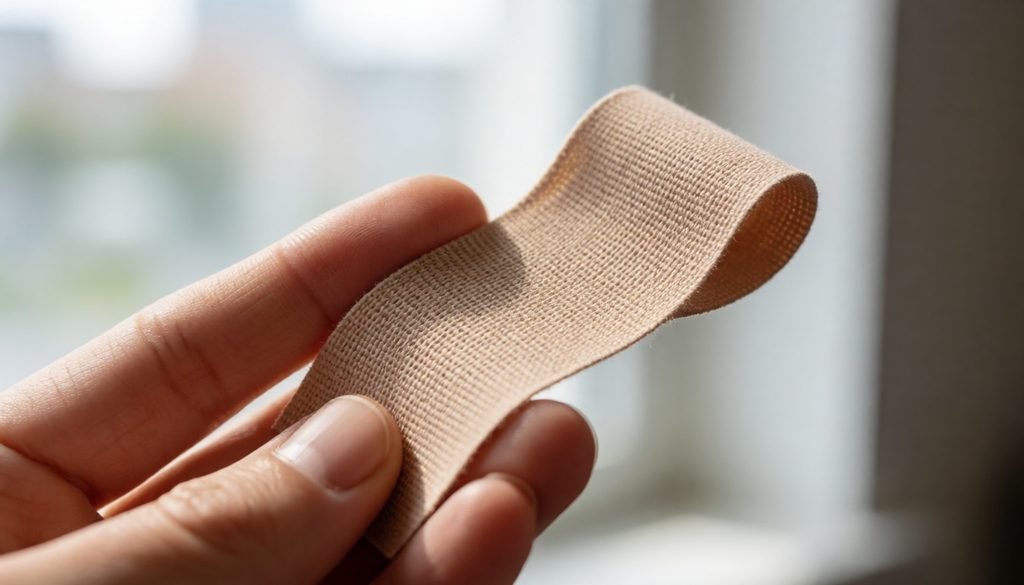
Fabric labels alone cannot tell you exactly how breathable tape will feel. Cotton tape often feels soft, while synthetic tape may dry faster after sweating. Blended materials can balance comfort, moisture control, and durability. However, weave, thickness, adhesive coverage, and product design also affect airflow. This means the material that allows more airflow can differ between brands. Check the label, then choose the most breathable fabric option for your skin, activity, and wearing time. Comfort also depends on movement. Tape should stretch smoothly and return toward its original length without quickly losing shape. Greater stretch does not automatically provide better support. The best tape stretches consistently, moves comfortably, and keeps its shape.
Precut Strips or Full Roll: Which Format Is Right?
Choose the format that makes your usual application easier. Ready-cut pieces or an uncut roll offer different levels of convenience and control. Precut strips come in consistent sizes and need little preparation. They can suit beginners, travel, or quick applications using standard strip shapes. However, fixed lengths may not fit every body area or taping method. A full roll lets you measure the required length and create I, Y, X, or fan strips. It takes longer to prepare but offers greater flexibility. When comparing the precut format versus rolled material, consider your experience, application method, and frequency of use. Choose precut strips for speed or a full roll for customized sizing and cutting.
Verify the Label Before Buying

Before buying, turn the package over and read beyond the front claims. If you are asking, “What product details should I check?” start with fabric, adhesive type, strip width, and roll length. Check whether the tape is labeled for sensitive skin, water resistance, or your intended activity. Review the recommended wearing time and the manufacturer’s directions for application and removal. Also look for warnings, storage guidance, and a clear materials list. Which label information matters most depends on how and where you will use the tape. These are useful details to review before buying, especially when two products look similar. A complete label makes comparison easier and helps you avoid unsuitable options.
Choose for Fit, Not Maximum Strength

The right tape is not always the strongest or least expensive option. Choosing kinesiology tape starts with matching the product to your intended use, skin, and activity. Compare adhesive hold, fabric, elastic recovery, size, and format before deciding. Finding the right elastic support means choosing enough hold for your needs without ignoring comfort. A lower price offers little value if the label lacks useful information or the tape feels unsuitable. Your next step is simple: read the label and compare every feature with your needs. If you need guidance, continue with the beginner’s comparison guide.